Why salt is
the main event.
Most labels lead with flavour. This lesson is about the one number worth checking.
In short
Sodium is the electrolyte lost most in sweat.
Check the milligrams, not the front of the pack.
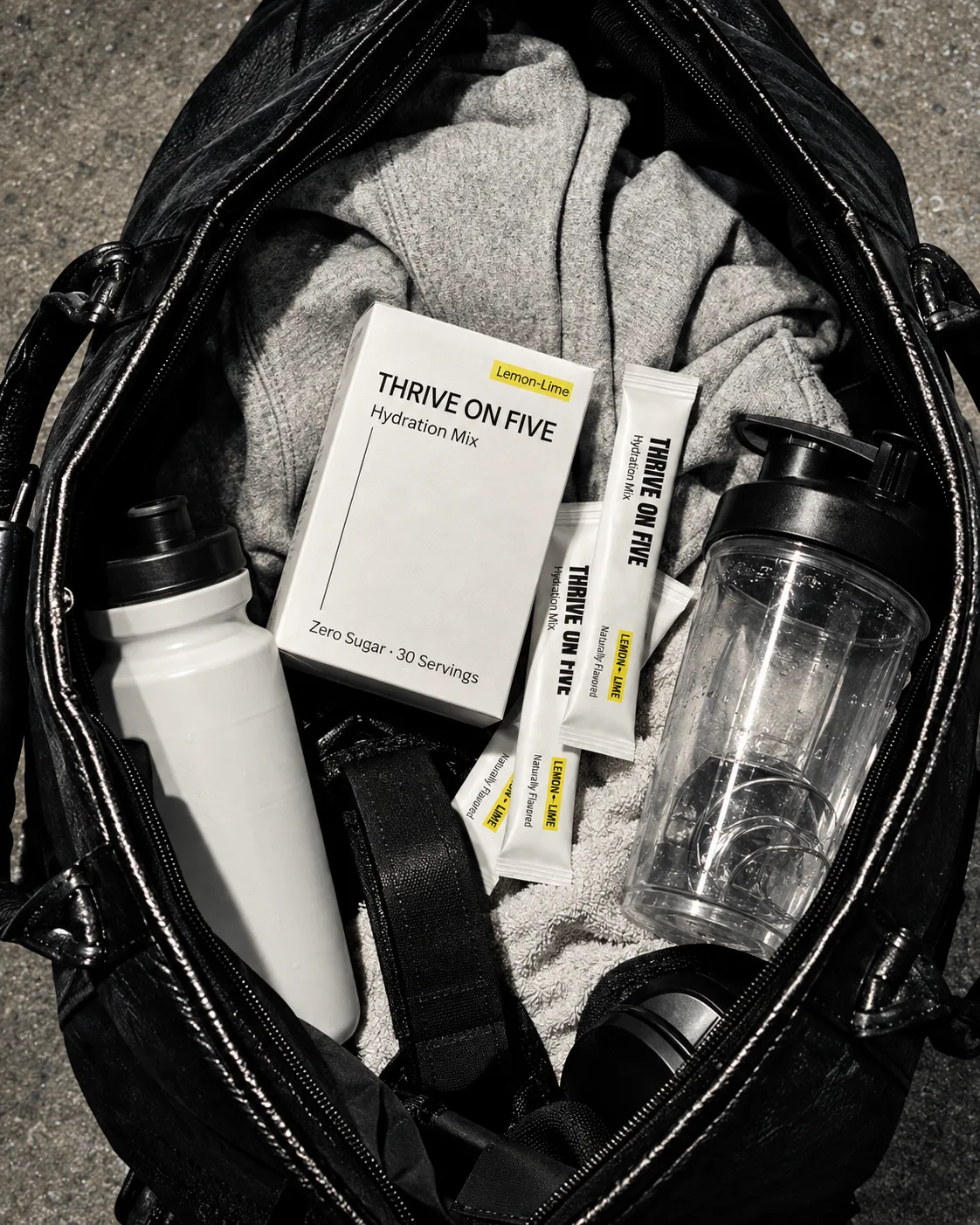
600mg per stick. Zero sugar.
On this page
01 Why sodium leads02 The other four numbers03 Read the label04 Salt is not sodium05 How much you lose06 Why zero sugar07 Who this is for01
Why sodium leads
Sodium is the electrolyte lost most in sweat, by a wide margin. It is also the one that holds water in the bloodstream and around the cells. Lose a lot of it and the fluid you drink has less to hold on to.
It also drives thirst. Drinks with sodium in them make you want to keep drinking, and the body keeps more of what goes in. Plain water switches thirst off sooner.
02
The other four numbers
Potassium, magnesium and calcium leave in sweat as well, in far smaller amounts than sodium. They belong on the label. They do not belong at the top of it.
A stick carries 600mg sodium, 200mg potassium, 70mg magnesium and 50mg calcium, with vitamin C, B6 and B12 on top. The order of those numbers is the order of what sweat takes.
03
Read the label
Turn the pack over. Find sodium, in milligrams, per serving. Then check what the serving is. Some products print numbers per 100 g, or call half a sachet a serving. The only number that matters is what ends up in your bottle.
Flavour, colour and the words on the front tell you nothing about how much salt you are replacing.
04
Salt is not sodium
Labels and guidelines switch between the two, so know the conversion. Table salt is sodium chloride, and sodium is about 40 percent of it by weight. One gram of salt holds roughly 400mg of sodium.
That makes one stick, at 600mg of sodium, the same as about a gram and a half of salt.
05
How much you lose
Multiply your sweat rate by how salty your sweat is. A fighter losing one litre an hour at 1,000mg per litre loses a gram of sodium in an hour of work. A lighter, less salty sweater might lose a third of that.
There is no single correct dose for everyone. Lesson 001 shows how to measure your own sweat loss. Start there, then adjust.
06
Why zero sugar
Sugar in a sports drink is fuel. It earns its place in long endurance work, where the tank runs low. Most combat sessions are sixty to ninety minutes, and most fighters would sooner get their carbohydrate from food.
So the stick has none. It is sweetened with steviol glycosides and monk fruit extract, and it is there for the salt.
07
Who this is for
Public health advice tells most people to eat less salt, and for someone who sits at a desk that advice is sound. This product is built for people who sweat hard, often.
If a doctor has told you to limit salt, or you manage blood pressure or a kidney condition, ask them before adding any.
Sources: Sawka MN et al. American College of Sports Medicine position stand: Exercise and fluid replacement. Medicine & Science in Sports & Exercise, 2007. Baker LB. Sweating rate and sweat sodium concentration in athletes: a review of methodology and intra/interindividual variability. Sports Medicine, 2017. This lesson is general education, not medical advice.