What a session
takes out.
Sweat is not just water. Know what leaves the body in a hard session and you know what to put back.
In short
Sweat is water and salt.
Sodium is the main mineral you lose.
Water alone does not replace it.
On this page
01 What sweat is02 Why fighters lose more03 No two fighters sweat the same04 Measure your own loss05 Where it starts to cost you06 What to put back01
What sweat is
Sweat is how the body cools itself under load. Working muscle makes heat. The body moves that heat to the skin, pushes water out through the sweat glands, and the water takes the heat with it as it evaporates.
It is almost all water. The rest is electrolytes, the minerals that carry a charge in the body. Sodium and chloride make up most of them. Potassium, magnesium and calcium leave too, in much smaller amounts.
02
Why fighters lose more
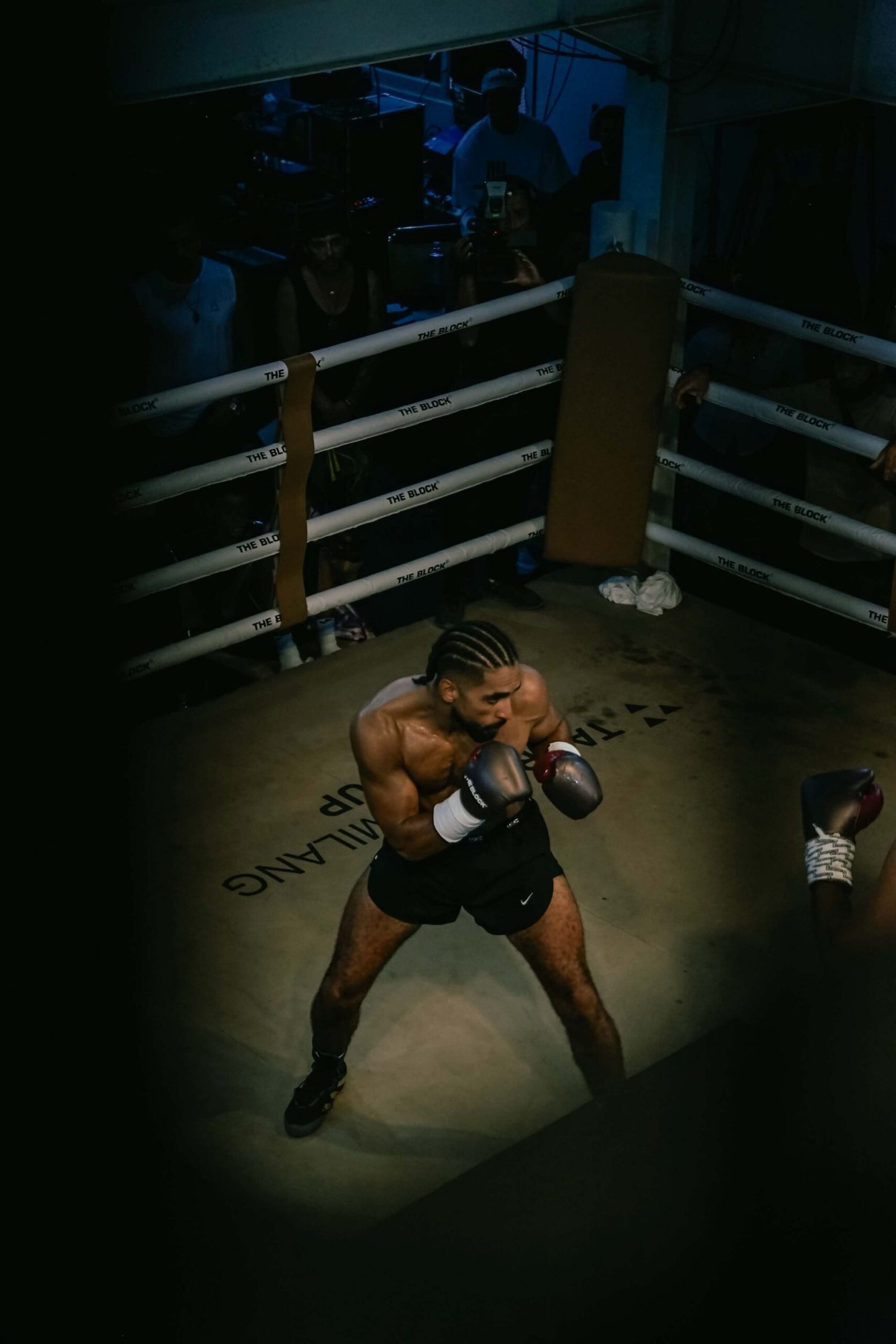
Hard rounds. Hot gyms with no air moving. Gloves, shin guards, a gi or a sweat top. Long sessions with short rests. Combat training stacks nearly every condition that drives sweat up.
Evaporation is what does the cooling. When sweat soaks into a gi or drips onto the mat, it cools nothing, and the body answers by making more. That is why a grappling session in a closed room can leave you lighter than a run outside.
03
No two fighters sweat the same
Research on athletes puts sweat rates anywhere from around half a litre an hour to more than two. Body size, fitness, the heat of the room and how used you are to it all move the number.
The salt in that sweat varies even more. One fighter can lose a few hundred milligrams of sodium per litre. The fighter next to them can lose well over a thousand. White marks on a dark shirt and sweat that stings the eyes are the usual signs of a salty sweater.
04
Measure your own loss
You do not need a lab. Weigh yourself before the session and again after, towelled dry, in the same kit or none. Add back whatever you drank in between. One kilogram down is roughly one litre of sweat.
Do it for a few sessions of different kinds: pads, sparring, conditioning. You will have your own range, which is worth more than any average.
05
Where it starts to cost you
The American College of Sports Medicine puts the line at about two percent of body weight. Past that, performance tends to drop, and it drops faster in the heat. For an 80 kg fighter, two percent is 1.6 kg. A hard session can take that.
The aim is not to finish a session weighing exactly what you started. It is to stay on the right side of that line and close the gap afterwards.
06
What to put back
Water replaces the fluid. It does not replace what the fluid carried. Drinking far more plain water than you lost brings its own problem, because it dilutes the sodium that is left.
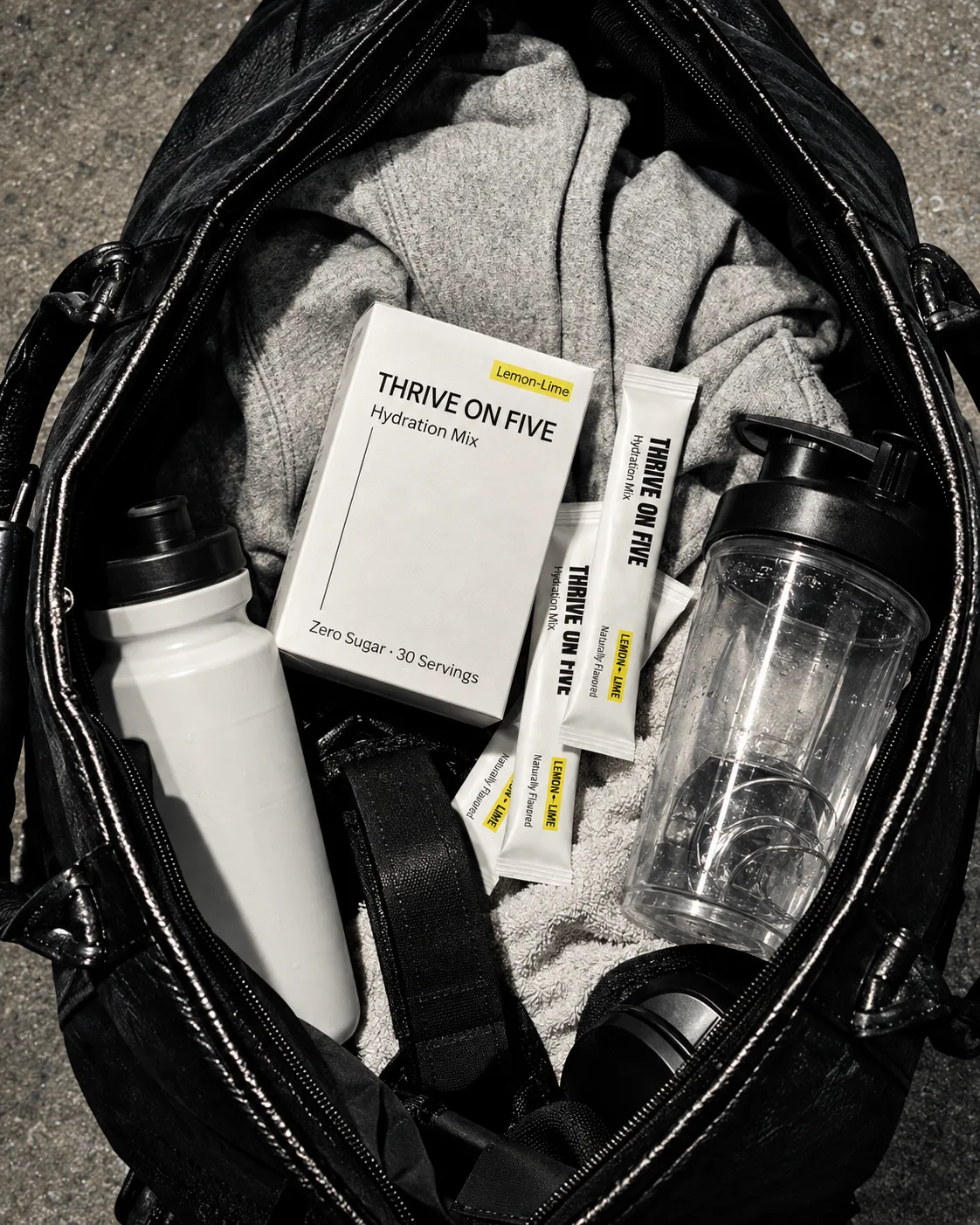
So the bottle should hold both. One stick is 600mg of sodium, with potassium, magnesium and calcium, in 300 ml of water. Zero sugar.
Sources: Sawka MN et al. American College of Sports Medicine position stand: Exercise and fluid replacement. Medicine & Science in Sports & Exercise, 2007. Baker LB. Sweating rate and sweat sodium concentration in athletes: a review of methodology and intra/interindividual variability. Sports Medicine, 2017. This lesson is general education, not medical advice.